A volunteer topo—or rescue “mole”—pauses at the entrance of one of the shafts at Residencias Caribe, a building severely battered by the June 24 earthquakes, right at ground zero in Caraballeda. He makes the sign of the cross and steps inside.
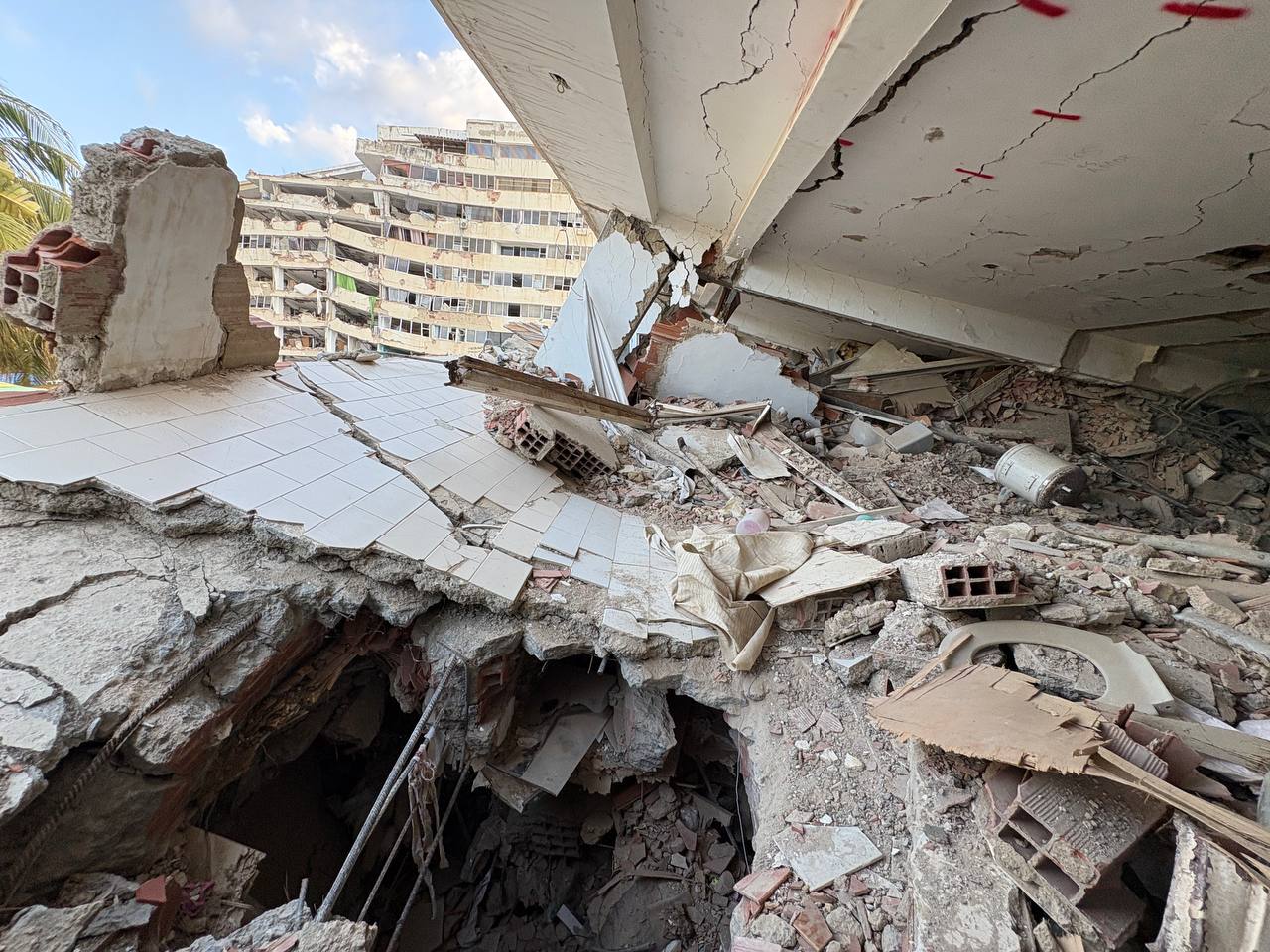
The shafts are tunnels dug by hand through tons of concrete, dirt, and structural debris. The work begins with the puntero (“point man”), as they call the volunteer who goes in first to scout the path and string a continuous line of lights to guide those following behind.
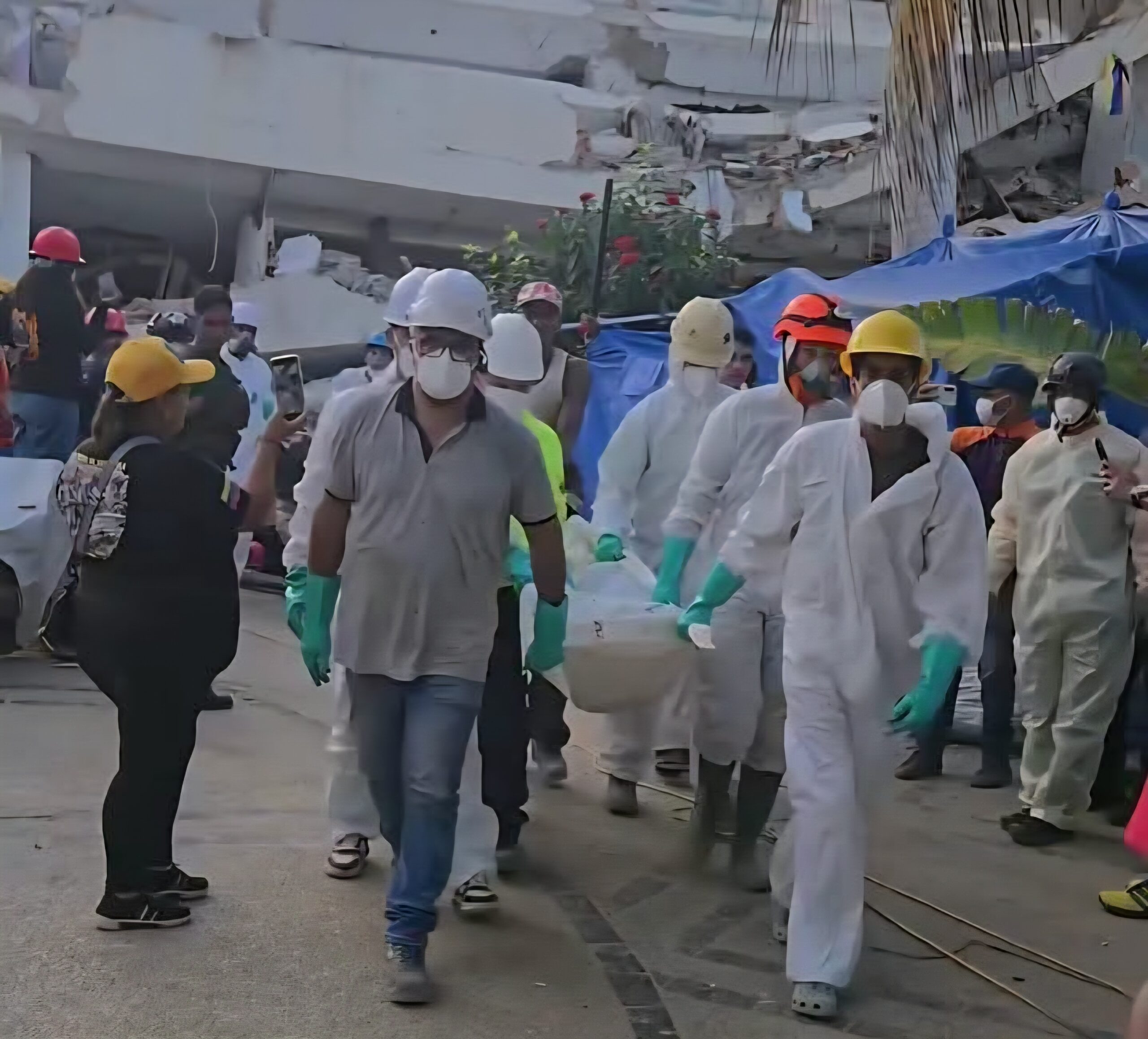
Next, four or five rescuers form a human chain. Using plastic buckets, they pass out the dirt and rubble excavated from within. Progress is slow and demands tight coordination. Once they reach the spot where they suspect a missing person may be located, the volunteers with the smallest builds crawl in to check if the body they are looking for is there.
The recovery is carried out with the utmost care. The rescuers strive to preserve the human remains in the best possible condition and collect any personal belongings that can be returned to the relatives. Every recovered item can represent a clue, a memory, or a final connection to the person they are still hoping to find.
The procedure repeats night after night. Some shifts end without results; others finally provide an answer to a family that has been waiting for months.
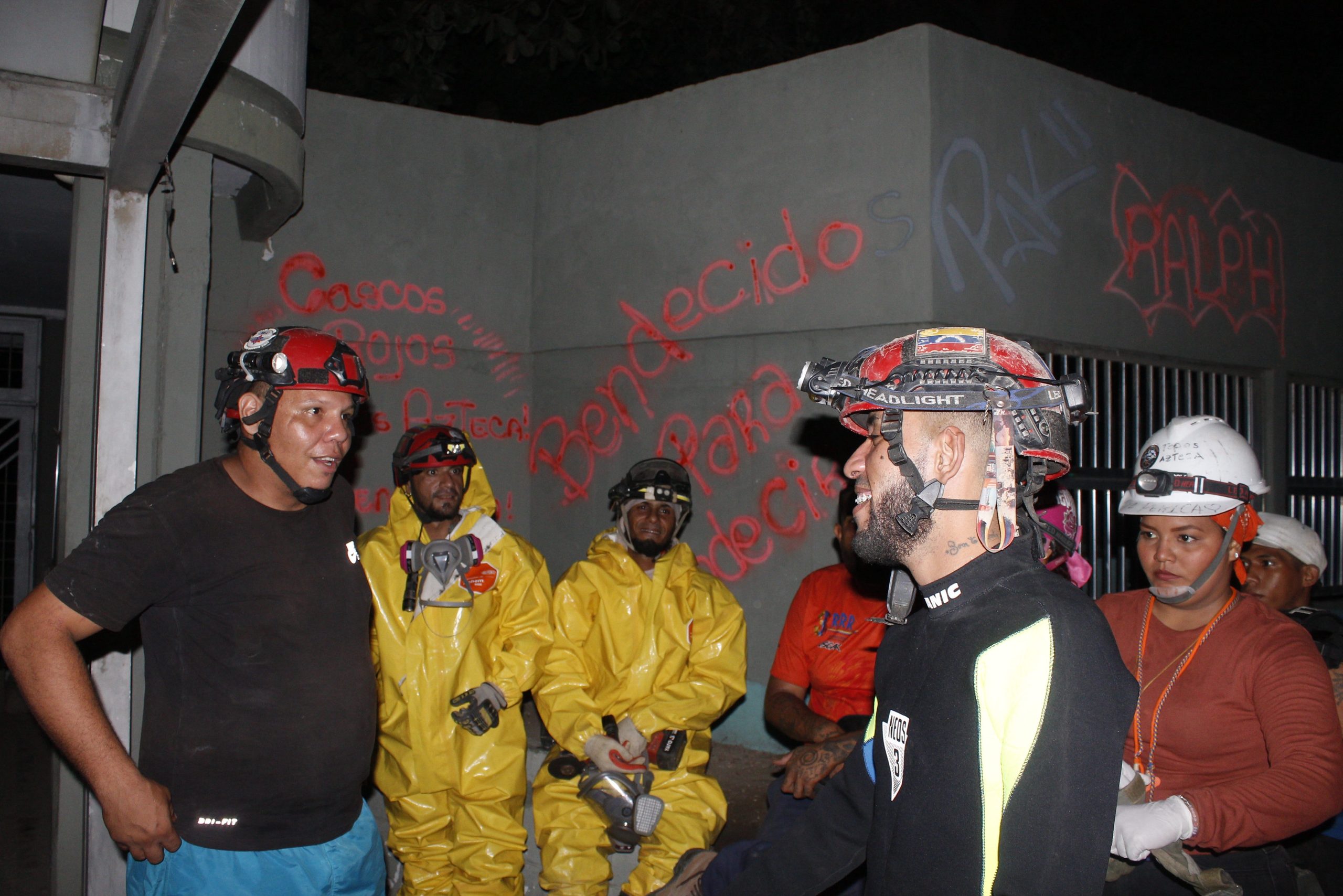
“We know we aren’t searching for lives. What we are searching for is to give a family peace,” says Juan Andrade, known to everyone as Chelo, a member of the Cascos Rojos (“Red Helmets”) team working at Residencias Caribe—the very building where he himself lost his home and his family.
Five months have passed since the June 24 earthquakes. Yet in this residential complex in Caraballeda, at the heart of ground zero, the search for loved ones goes on.
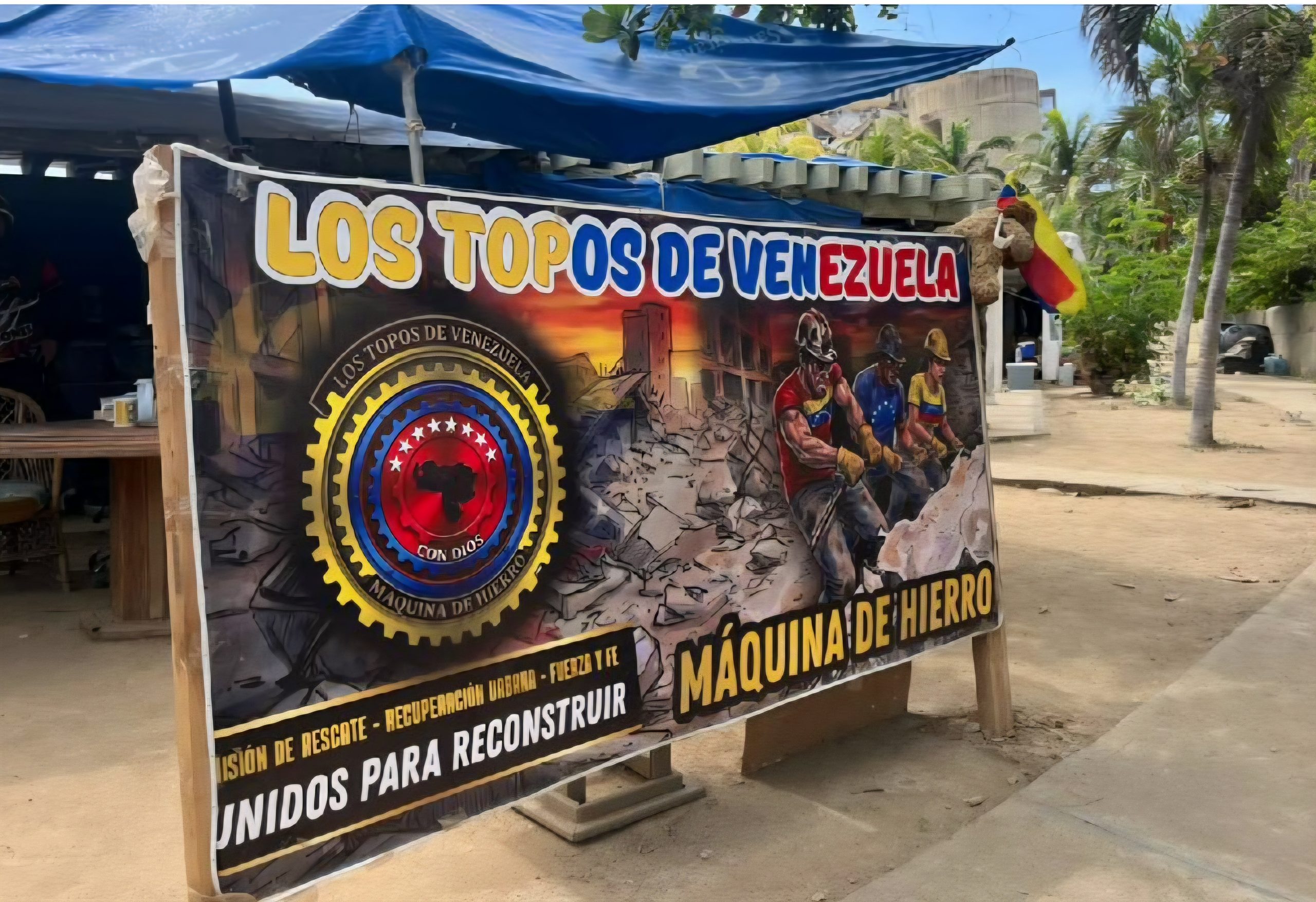
At least four teams of volunteer topos maintain operations at the site: Fundación Máquinas de Hierro (“Iron Machines Foundation”), Team Adrenalina Topos Voluntarios, Cascos Rojos, and Unidad de Búsqueda y Extracción 26 (UBE 26).
Their members come from different communities along the central coast, from Caracas, and from other regions of the country, or even from neighboring nations like Colombia. Some lost relatives, friends, or their own homes during the twin earthquakes. Others arrived in the first days to lend a hand and decided to stay to serve amid the grief.
For them, entering a tunnel is not merely a search operation. It is taking on the responsibility of standing beside a family that needs to know what happened to one of their own.

“The truth is, this pulls you in. Being a topo inspires you, because you know you carry a huge responsibility when you feel that a family needs you in order to close a chapter, to find answers. Sometimes people ask us if we’re crazy or if we’re scared, but we aren’t crazy. We are sane, and we don’t think about fear. We think about the love, the hope, and the peace of mind we are going to give back to someone else. That is what drives us to crawl into these tunnels and look for the people who are still beneath the rubble,” explains Darvis Espinoza, a member of Máquina de Hierro, who is moved to tears as he tries to put into words what it feels like when a family thanks them for recovering the remains of a mother, a child, or a partner.
Technology and human strength
For the volunteers, the missing are not statistics. Every body recovered and every identification made represents an answer for a family that has been waiting for months.
The official death toll from the June 24 earthquakes has remained at 6,509 since August 24. However, search and recovery operations continue inside the collapsed structures.
Over the past month alone, rescue teams recovered four bodies at Residencias Caribe in Caraballeda, two at Residencias El Jurel, and one at Residencias Belo Horizonte—both complexes located in Playa Grande.
“That number cannot remain static, because there are still bodies left in the ruins of several buildings. There are people who gave up at one point and now, seeing our work as topos, come here to Residencias Caribe to ask for our help,” explains Javier Navarro, leader of Máquina de Hierro.

Navarro knows that wait from the other side. His work as a topo began when he searched for nine members of his own family who died in Tower I of the Opppe-26 housing complex, in the Caribe neighborhood of Caraballeda.
He learned search-and-extraction techniques from foreign specialists, gathered tools, and developed procedures to reach his relatives. After finding them, he decided to keep going for other families.
“These families deserve to have the peace I felt when I found my own,” says Navarro, who struggles to speak about what happened and to recall his relatives. For that reason, he rarely gives interviews.
The search also relies on technological support. Using drones equipped with thermal cameras and other devices, specialist Taylor Villarreal has helped identify points of interest within the collapsed structures. These signals help guide where to dig, though they do not confirm the presence of human remains.

Verification depends on the topos, who must force their way by hand through concrete and earth to reach the marked locations.
At Residencias Caribe, technology has pinpointed at least 40 spots where human remains could be located. Each one represents a new possibility of recovery—and for those still waiting for news, a chance to finally learn what happened to their loved ones.
Among those holding onto that hope is Marlon Paz, who is searching for his wife, Kinger, and his son, Sebastián. He has followed the teams’ work closely, joining in to provide logistical support. “I have seen how the topos have managed to recover other people who were trapped under the rubble. That’s why I’m still here, waiting for my family. I trust the topos.”
Being the solution, not victims
The willingness to help does not mean going in at any cost. The topos know that working inside a collapsed structure means exposing themselves to constant danger. Every entry therefore requires coordination among the teams, an assessment of ground conditions, and safety measures to prevent new accidents.
The premise is clear: they cannot become additional victims while trying to help the families still waiting for answers.
At Residencias Caribe, the four teams operating on site strive to follow strict work and safety protocols.
However, the conditions under which they excavate do not always come with the resources required for a task of this complexity. Many of the tools and protective gear they use depend on donations and contributions from private citizens.
Jonathan Patti, spokesperson for Team Adrenalina, explains that the volunteer nature of these brigades limits their ability to purchase supplies and maintain proper working conditions during their shifts.
Sun exposure, high temperatures, and the need to remain in the work zones for hours at a time make water, ice, and shaded shelter indispensable.
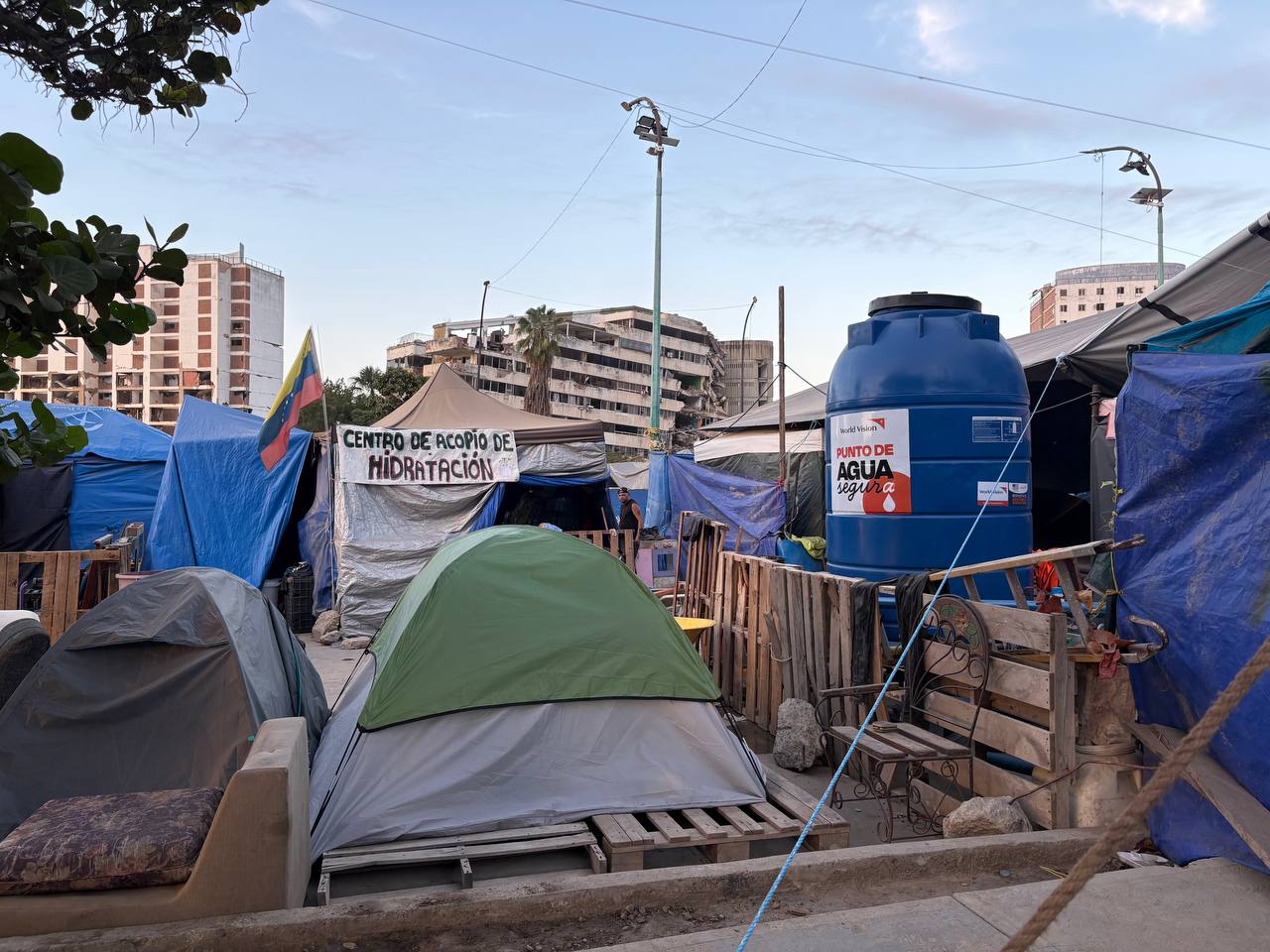

“Working in La Guaira in an unforgiving climate forces us to stay constantly hydrated and to have ice on hand. And, of course, the ideal thing would be to have tarps over the work zones so we can protect ourselves from the sun, which is a pretty complex issue. All of the teams working here at Residencias Caribe are doing so with the utmost willingness and commitment to ensuring no one is left beneath the rubble,” Patti notes.
Before the earthquakes, Patti worked as a political leader. He put that activity on hold to join the citizen rescue movement and dedicate his efforts to operations at the damaged buildings.
The weather also dictates their work schedules. High daytime temperatures turn the shafts into especially grueling spaces: heat builds up inside the tunnels, ventilation is scarce, and the odor from decomposing remains can become unbearable.
For that reason, much of the digging takes place at night, while during the day the volunteers rest in makeshift camps set up inside the damaged structure itself.
“There is no luxury or comfort here. The emergency may have ended on social media, but the tragedy is still right here,” remarks Ericson Ramírez, leader of Cascos Rojos.
The experience accumulated over five months of work and constant movement through the shafts has also allowed the topos to become intimately familiar with the layout of Residencias Caribe.
They have learned to recognize load-bearing points, areas offering greater stability, and passages where they can advance without compromising their safety.
“We only work beneath support columns and beams. That’s where we feel protected. Whenever a shaft is at risk or poses a danger to us because the material isn’t solid, we look to build another tunnel and have to start over from scratch. Either way, those are the hazards of this trade,” explains Jean Carlos Istúriz, a member of the search unit UBE 26.
That experience has also proved essential during the search for Marcos Piñango, whose recovery is being led by the Cascos Rojos team. Rescuers had to reroute their excavation and open a new tunnel to continue searching for his remains and reach the apartment where they believe he is located.
Much-needed help
On Friday, November 20, a topo known to everyone as “Sobrino” lies on a thin mattress, wracked with pain.
The night before, while working inside one of the shafts at Residencias Caribe, he injured himself against the tight confines of the tunnel.
A Civil Protection team, whose camp is set up on the grounds where Opppe-26 once stood, arrives to treat him. He is carried out amid groans of pain and the visible concern of his teammates.
The scene unfolds just as representatives from a foundation based in Carabobo state, accompanied by Father Iber Aguilar, arrive at the camp to deliver aid and speak with Omailyn Arrioja, logistics coordinator for Máquina de Hierro.
Situations like this are part of daily life for the volunteers, who, in addition to facing the hazards of excavation, must deal with illnesses, injuries, and other needs that arise during their shifts.

“A typical day can look just like this. We have to deal with the topos, the guys, the volunteers getting sick. We don’t have many resources to give them first aid, so we have to call on paramedics to transport them. We also welcome people coming from other parts of the country who bring us donations of food, some medicine, face masks, and gloves—all the supplies that get used up day after day,” Arrioja explains.
A real estate agent from Caracas, Arrioja traveled to La Guaira after the earthquakes to search for her best friend, Andreína Navarro, who died when her apartment building collapsed completely. Her own personal story also became bound to the tragedy and the work of recovering bodies.
“The truth is we are all hurting; we are all very sensitive people. We carry our own grief, but we also take in and listen to the grief of other people who want us to find their relatives, who want an answer. The only thing we can offer them is the hope that we are going to work for them. That’s what we commit to day after day. But every now and then, all of us topos need a hug too,” she says.
When Máquina de Hierro first began operations, there were six volunteers. Today, nearly 40 remain. Nor is their work limited to Residencias Caribe. Over the past week, they took part in recovering two bodies at Residencias El Jurel in Playa Grande, one of the most complex extraction sites along the central coast.
The ongoing needs they face during operations lead Arrioja to stress the importance of keeping public attention on what is still unfolding at the earthquakes’ ground zero.
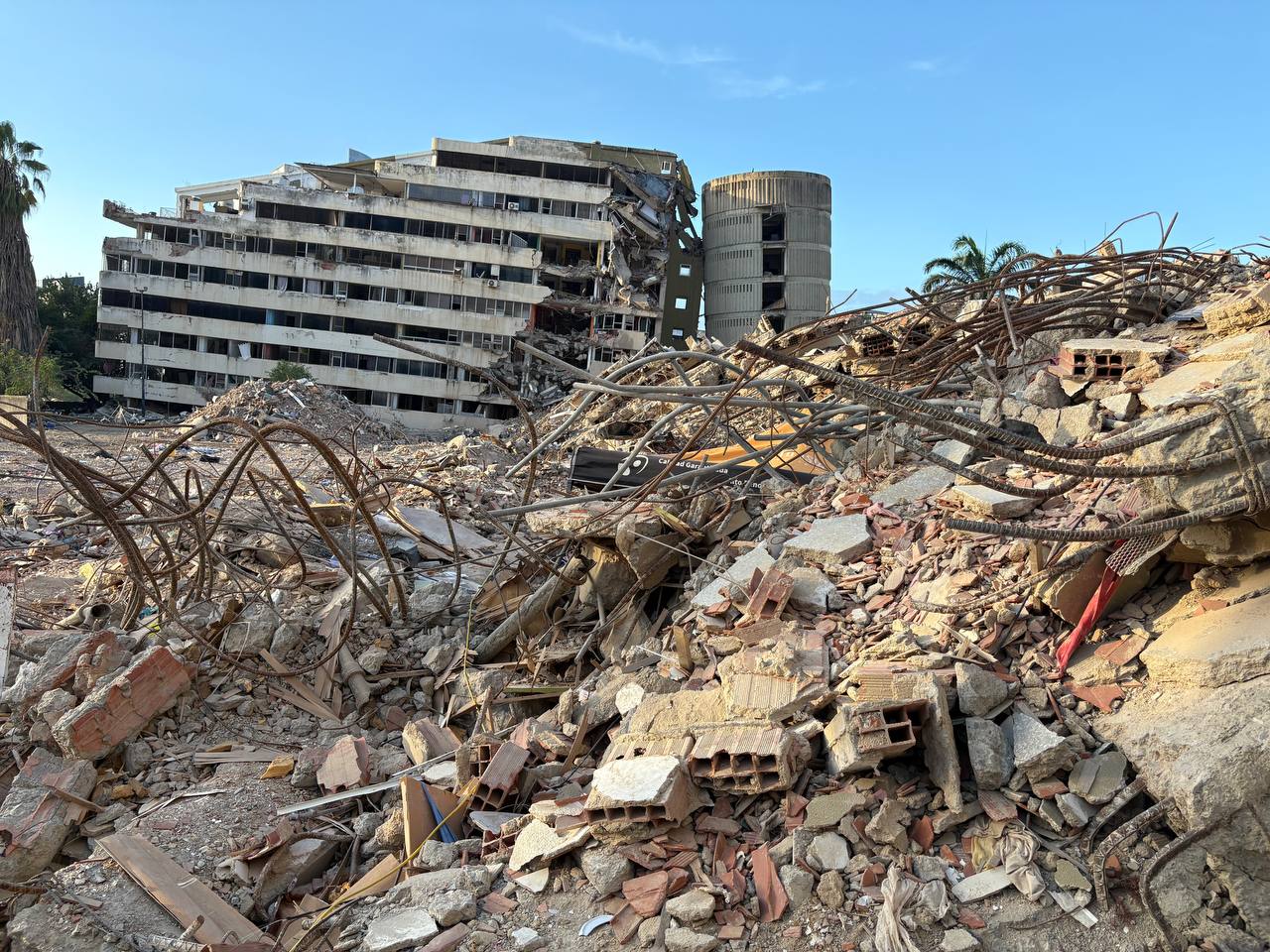
“We are still here searching for and recovering bodies. If people want to see how we work, I think the best thing they can do is come down to Residencias Caribe and see up close what is happening. Everyone can pitch in and not look away. I feel that if anything should have ended with the earthquakes, it’s indifference,” she says.
At Residencias Caribe, grief and hope meet at every camp.
The volunteer topos keep crawling into the shafts, clearing dirt and concrete, searching for those who remain trapped beneath the collapsed structures. Waiting for the solidarity that remains essential so they never have to stop.