
Written and illustrated by Gabriela Rodríguez Soledad. This story was produced in partnership with the Red de Periodistas de la Amazonía Venezolana.
*The names of the people in this story were changed to protect their safety.
In the mines of Venezuela, there is a bit of everything: businesses, cooks, and sexual exploitation. Children also work there, many of them.
Luis is 11 years old, and what he likes best is playing football and making money in the mine. He is in fifth grade, but it wasn’t until a couple of years ago that he started going to school, after participating in a schooling project in his community. When classes end, his vacations are a journey to search for gold in Guasipati, in the south of Venezuela, where he meets up with his father.
He lives in Ciudad Guayana, Bolívar. He has 5 siblings, none of them adults. The oldest is 16 and decided to drop out of school to work in mining. However, one of his teenage sisters attends school without fail. She dreams of becoming a doctor.
By 2023, there were more than 1,300 children working in and around the mines, according to the Human Rights Center at Universidad Católica Andrés Bello (CDH-UCAB). For many of these children, this is all they know. According to their parents, they don’t have many options given the need to survive.
Illegal mining in the south of Venezuela is tied to the Orinoco Mining Arc, the exploitation zone endorsed by the Venezuelan government since 2016 that allows both legal and illegal mining activity. Amid ecocide, sexual exploitation, and crime, local children are exposed to child labor and modern slavery. Even those living in major cities hours away from the mines are exposed to the risks.
Eumelis Moya, a lawyer and coordinator at CDH-UCAB (Guayana office) with experience in social research in southern Bolívar state, says that mining was practiced by the communities inhabiting those territories and by state-owned companies before the mass expansion brought on by the Arco Minero boom. But now, many boys, girls, and teens are left with relatives by parents who are leaving the country or going to the mines. They remain in the care of aunts, uncles, grandparents, or even neighbors. Or come and go from the mines as if they were work trips, just as Luis does.
Luis and the curse of gold
Luis’s mother, Alejandra, went to the mine just once and said she would not return; she wants her children to stay away from gold’s influence. She manages to keep them in school thanks to projects that support education in the area.
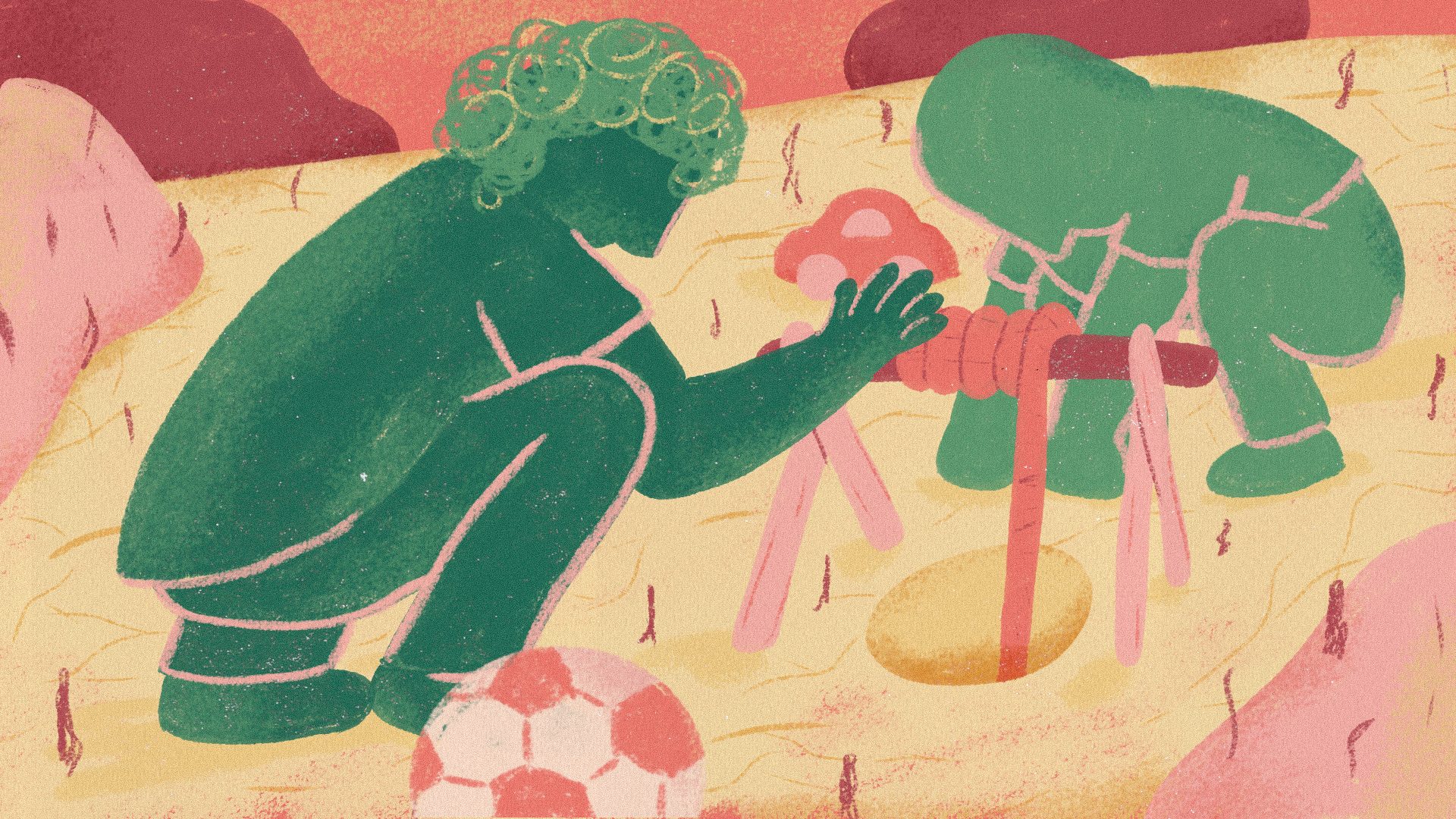
The children in the community where Luis lives often play football, but they also like to imagine that they are miners: they dig holes in the dirt streets and build scale models of “machinas,” a variation of “machine,” which is what they call the cranes used to raise and lower materials in the mine.
Luis feels he doesn’t have many friends. “What if we are hanging out in a house and something goes missing? What if one of my friends stole it and they blame my brothers and me?” He doesn’t want trouble, so he prefers to spend his free time fishing with his dad or playing with his ball. Luis says he only has one friend at the mine, a woman who works as a cook. When he goes to work during vacations, he gets up at six in the morning and she has his breakfast ready for him.
When he grows up, Luis would like to be a football player or a miner like his older brother. He uses the money he makes with his dad in the mine to buy candy, cookies, and condensed milk, though he would like to buy a phone to play on and give money to his mother.
There is a curse in the south: falling in love with money, or at least that’s what some mothers and community leaders call it. Alejandra says her son Luis really likes money, and like her, other women say that children cannot escape the curse, and they often buy their first motorcycle by age 12.
For those who grew up in the mine, the search for gold is not just a seasonal task for a few months of the year; it is their daily life. Although some manage to balance work and study, an increasing number drop out of school to work in mining full-time. The CDH at UCAB published a report in 2023 stating that more than 1,300 children are not studying due to migration to mining areas.
Miguel and the life he chose
Miguel’s family moves from mine to mine. They moved to El Callao when he was 6 years old, and since then, Miguel has also been a miner. When he was in sixth grade, his mother decided not to enroll him or his siblings in school anymore. His mother also works in gold extraction.
Today, Miguel is 17 years old. He has broken several hearts, has a few tattoos, has lived in different houses, and has three children. Only one thing hasn’t changed: he keeps working in the mines.
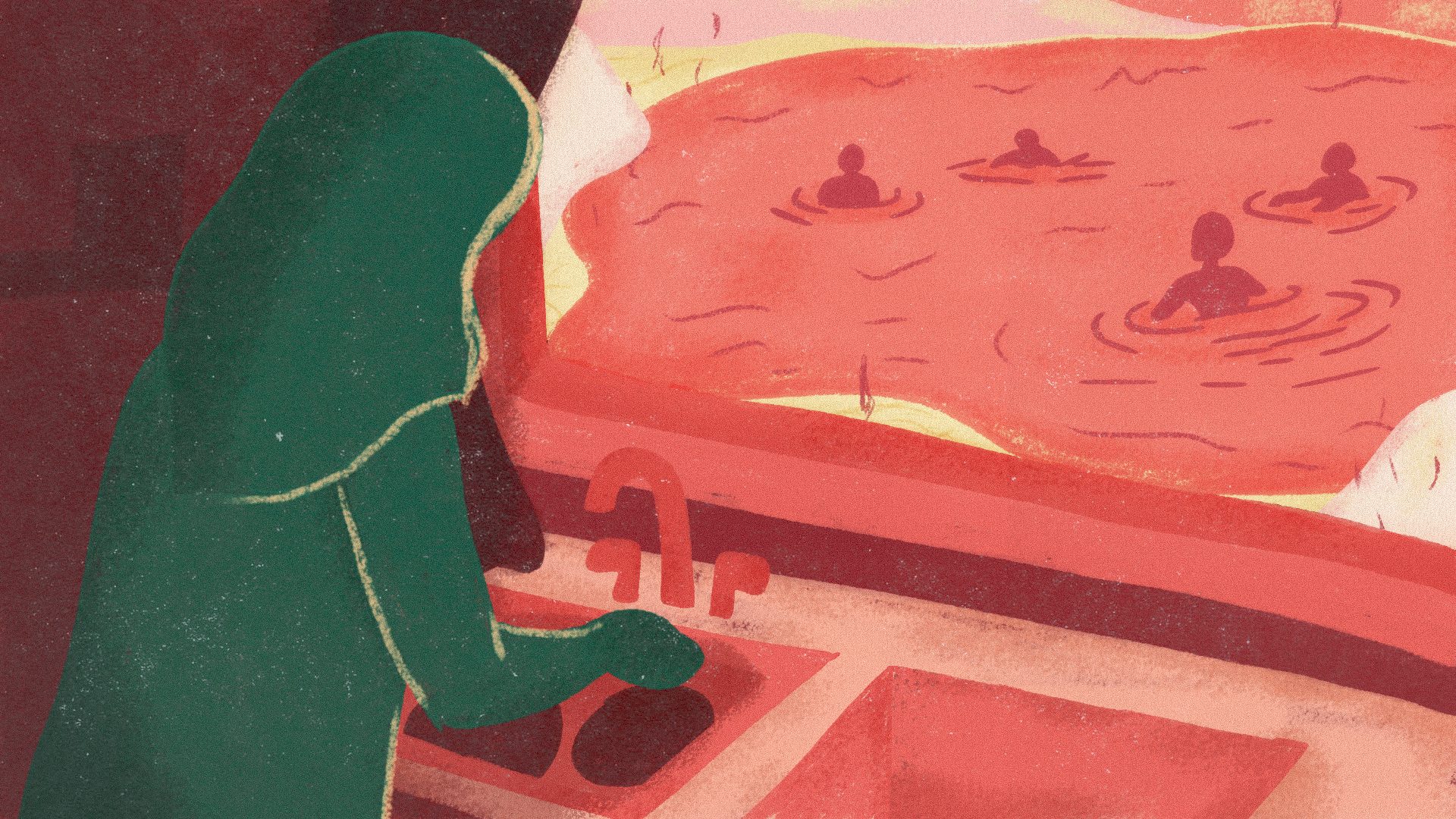
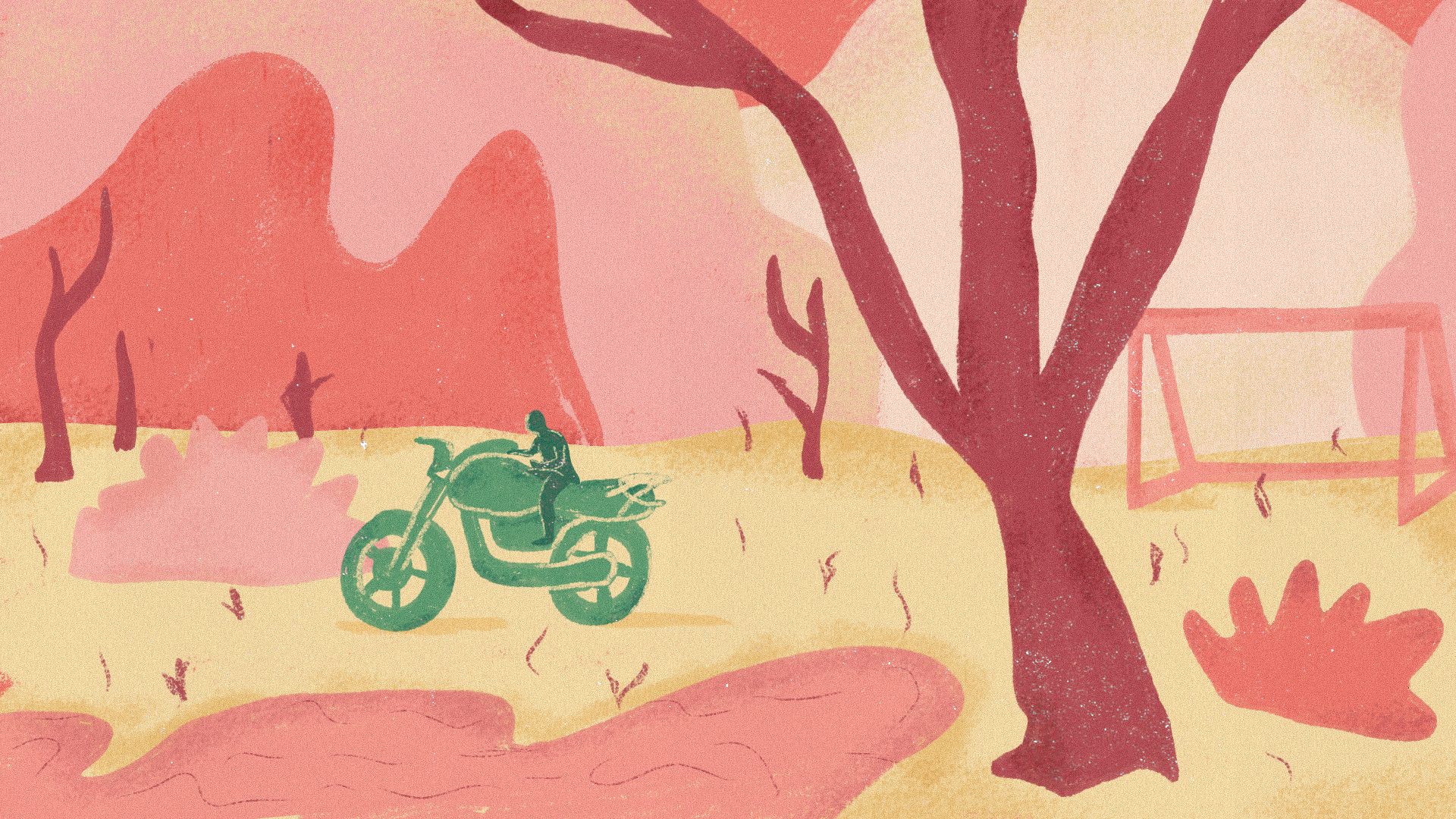
Where he lives, there used to be a dirt field where children used to play football. Now, it is an artificial lake as a result of illegal artisanal mining. There, miners wash the pans used to extract gold while children bathe and teenagers ride their motorcycles around the land.
The area is an example of the environmental impact of uncontrolled mining: the ground is full of “barrancos” (pits dug into the soil to extract material), some already abandoned and others used daily. Neighbors note that everything changes every two months, and bit by bit, space for children’s play and enjoyment gets smaller.
Miguel met the mother of his daughter when he was 15. They fell in love, and Miguel built “a little house” for her and their two-year-old daughter. It is made of corrugated zinc walls, a dirt floor, and many colorful sheets. It is her space, her place, one that Miguel promises to improve when his girl grows older.
What he likes about working in the mine is descending into the pits to pick at the alluvial deposits or adits. Miguel believes they look for children and teenagers to work because they have more energy, are more active, and can shovel, pick, carry, and haul sacks out of the holes in minutes. Also, being smaller, they can squeeze into narrow openings and tight spaces.
“The life I picked isn’t very long, you could say,” Miguel admits. At one point, he wanted to become an officer for CICPC (the Criminal Investigations Corps of Venezuela, an equivalent of the FBI), a national security agency with a documented history of human rights violations over the years. But since he didn’t finish high school, he couldn’t join their ranks.
Julia’s plans
Julia believes working in the mine changed her life. She is 30 years old and started mining 6 years ago. Before that, she sold cakes and ice cream around the mines, but what she earned was barely enough to buy food for a single daily meal.
She lives with her four children, her partner, who has worked in the mine “since he was born”, and her mother-in-law, who at 70 is still a miner. Her house has corrugated zinc walls and roofing, a sand-and-cement floor, and a curtain as the door to the only bedroom. But today, the refrigerator, stove, and other appliances are brand new, top-of-the-line models still carrying their tags. Julia furnished the house in a short time.
Sometimes Julia had to choose between food and sending her kids to school, and gradually the children stopped attending; she says it’s because of rebelliousness, as it had happened to her, and out of a “love for money.” Julia’s oldest children aren’t even 17 yet and already own motorcycles, bought with their own money. Money they earned from mining.
Andrés, the eldest son, has worked at the mining mills since he was six years old, the exact age of her youngest son, Marcos. One of Julia’s proudest achievements is that Marcos is enrolled in a private school and is her only child currently studying. He even knows how to count a few numbers in English.
Julia pays Marcos to motivate him to go to school, and he calls it “his business”, though he happily claims he doesn’t want to work because “his parents support him.”
“The three older ones decided not to study, so the same thing isn’t going to happen with the last one,” Julia explains. “For every assignment, I give Marcos 500 bolivars, 1,000 bolivars for his snacks. He knows; he already understands gold. He knows it brings in money.”
When Marcos comes home and tells his mother, “I didn’t copy from the board,” Julia replies: “You know that means no snacks,” because she doesn’t want him missing homework and falling behind. “He can get the money, but he has to earn it.”
Marcos’s best friend is Daniel; he is eight years old and lives next door. He attends school, though not at a private one like Marcos. From time to time, when he is with his grandfather, Daniel helps him search for gold in exchange for money for candy, but to him it’s just playing and spending time with family. Both boys dream of being part of the military or the police when they grow up. They say it’s because they saw a TikTok video of an officer “doing justice.” The video depicts a police officer murdering a criminal.
Days go by like this: while coloring, Marcos wants to draw a gold bar and Daniel a dog. They really like Paw Patrol, an animated show about rescue dogs that they watch together on Julia’s phone. Both are very interested in palm reading; Marcos believes he is going to be a millionaire based on one of the lines on his hand.
Julia has a long-term life plan: set her teenage sons up to learn how to fix the motor of the machines used in the mine, giving them another skill so they can help with the family business. The boys aren’t partiers, and Julia has taught them to invest rather than waste their money.
“I cried every single day since I was 13 years old,” Julia says. Her goal is for her children not to feel the same way, to become independent, and to start their own families. She believes they won’t leave mining behind since they like it and it brings in the money, but the plan for Marcos is different: his mother wants him to study, earn a degree in business, and manage the family business in the future.
Fatherhood in the mines
Working in the mine is a resource for some parents to keep their children off the streets. Women in the 25 de Marzo neighborhood in San Félix talk about rebellious teenagers who don’t want to study and how the mine helps to “give them something to do.”
Juan, 33, is a miner and father to eight boys, the youngest being a two-year-old. His siblings live in the mines with his mother, who at 60 still works as a miner.
He wants his children to continue studying and “be someone in life.” Becoming a miner was the last thing on his mind. He says it’s the hand life dealt him.
Two of Juan’s boys want to join the police; another wants to be a firefighter. His wife says the kids love seeing officers drive by on motorcycles. They get excited seeing their police officer brother arrive with guns, helmet, and gear, or seeing him in uniform. But Juan and his wife would prefer them to be anything other than miners or police officers.
There are parents who like having their children come with them to the mine, Juan shares. His brother took his 15-year-old nephew to work because the teenager didn’t want to study or find a job. Juan says he prefers having them “working with me than out who-knows-where, so they don’t lose their way, staying with me rather than being on the streets.”
Adults bring children to the mines to keep them away from crime in their cities, failing to see that they are exposing them to armed groups in the mining regions. Their presence has been normalized. In some towns, they are the ones sponsoring schools or sports teams, without putting aside their violence and illegal activities, explains Eumelis Moya.
When classes begin, children like Luis return to their home cities, 155 kilometers away from the mining areas, and some even return to school. For the children of the mine, there seems to be no pause, only continuing to extract gold until they become adults and can decide if they want to do something different… something within their reach and part of the environment they know, such as becoming a police officer, a guard, or a merchant.
Luis is now about to enter his final year of elementary school; the last grade Miguel finished. It is a decisive moment for the children living in the south, so close to gold and its promises.